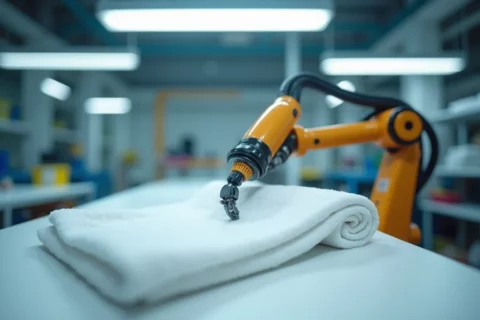
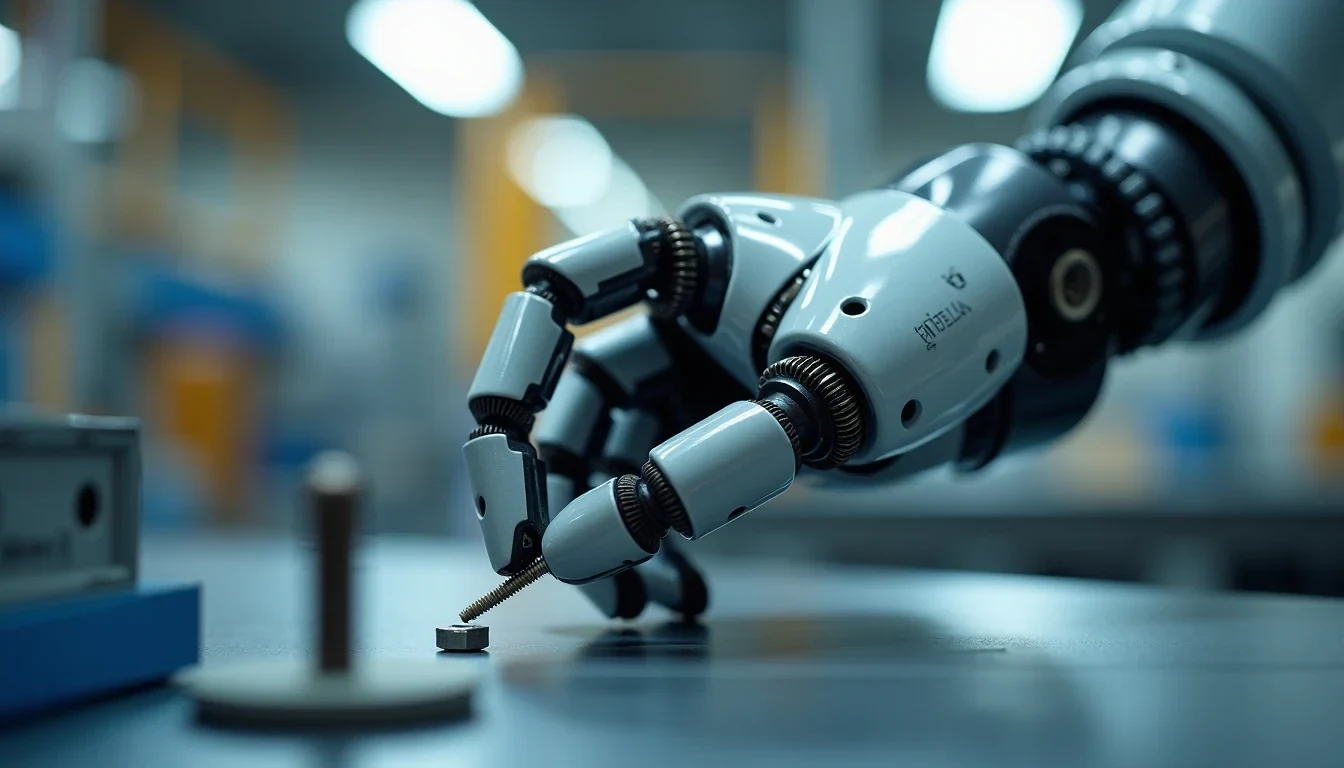
A single Linkerbot hand contains twenty degrees of freedom. Micro-actuators drive each finger segment, which is sheathed in tactile sensors that map pressure across its surface. The company runs factories in Beijing and Shenzhen. Its customers include humanoid startups, university labs, and industrial automation firms that all need the same thing: a grip that can thread a screw, fold fabric, or cradle an egg without crushing it. The hand is not a robot; it is the part of a robot that every robot builder has discovered is brutally hard to make.
This is the pattern across China’s emerging humanoid supply chain. The finished machines grab headlines, but the motors, reducers, sensors, and control systems inside them are where the money collects.
The Components That Break Most Builds
Humanoid robots fail at the joints. Not the software, not the battery, but the electromechanical modules where torque meets precision in a package smaller than a coffee mug. Integrated joint assemblies must combine frameless direct-drive motors, harmonic drive reducers, multi-axis force sensors, and thermal management into a single unit. This unit must lift, hold position, and survive millions of cycles without backlash or overheating.
Dexterous hands multiply these problems. Each finger needs independent actuation, proprioceptive feedback, and enough compliance to handle deformable objects. The materials must be light enough to preserve arm payload capacity and robust enough to survive repeated impacts. Linkerbot’s training platform addresses the software side of this by converting human demonstrations into reusable manipulation skills for soft objects, fine assembly, and tool use. The hardware remains the binding constraint. A hand that learns quickly from demonstration still needs fingers that can actually execute what the model outputs.
High-precision harmonic reducers illustrate the manufacturing challenge. The flexspline inside these gearboxes requires machining tolerances measured in micrometers, with assembly cleanroom conditions that make scaling expensive. Only a handful of suppliers worldwide can produce them reliably. Chinese firms have entered this market aggressively, but most competitors stall in the gap between prototype and million-unit production.
Why Component Suppliers Outlast Brands
The humanoid robot market will consolidate. History suggests most hardware categories do. Dozens of startups currently pitch their own full-body platforms. A few will survive, possibly only two or three. The component manufacturers supplying hands, motors, and joint modules to all of them face a different trajectory.
Linkerbot’s position exemplifies this. By selling dexterous hands and training systems across multiple customer platforms, the company collects revenue from sector growth without betting on which brand succeeds. If Humanoid A fails and Humanoid B absorbs its talent and patents, both needed hands during development. Both may still need hands after consolidation, since in-house manufacturing of these components rarely makes economic sense even for large robot makers.
This diversified demand creates stability that end-product manufacturers cannot match. A humanoid startup burns cash on integration, marketing, and the existential risk that its specific machine finds no buyer. A hand supplier burns cash only on making better hands, with customers who compete against each other but share the same supplier. The dynamic resembles semiconductor equipment more than consumer electronics: Applied Materials and ASML profit whether Intel or TSMC wins each process node, because both need the tools.
Manufacturing Scale as Competitive Moat
China’s industrial base enables this component specialization in ways that would be harder to replicate elsewhere. The Pearl River Delta and Yangtze River Delta concentrate precision machining shops, rare-earth magnet processors, PCB fabricators, and assembly houses within hours of each other. A design iteration that might take weeks to source internationally can be prototyped in Shenzhen in days.
Government support amplifies this density. Made in China 2025 identified robotics as a strategic priority, directing R&D funding, tax incentives, and industrial park development toward advanced manufacturing. The result is not just cost advantage but speed of iteration. A reducer design can be tested, modified, and re-tested against physical samples faster when the supply chain sits within a single metro area.
Linkerbot’s dual-factory structure reflects how Chinese firms optimize within this geography. Beijing facilities are likely closer to research institutions and government funding channels. Shenzhen operations tap export logistics and component sourcing. The split is not unusual; it is how companies capture both the policy environment of the capital and the manufacturing velocity of the south.
The Training Gap Between Hardware and Skill
A capable hand without capable software is merely expensive. Linkerbot’s platform converts demonstrated human actions into reusable robot skills through imitation learning. An operator teleoperates the hand through a task, the system extracts the underlying policy, and the resulting skill generalizes to similar objects and contexts. This bridges a critical gap in deployment.
Industrial arms have thrived in structured environments where every part location is known. Humanoids are pitched for warehouses, homes, and factories where variability is the constant. Teaching each task through classical programming is impractical. Learning from demonstration, reinforced with haptic feedback and force control for compliant interaction, offers a path to scalable skill acquisition.
The methodology increases the value of component suppliers’ hardware. A hand that ships with a proven training pipeline reduces integration risk for robot developers who lack robotics AI expertise. This software-hardware bundling, common in industrial automation but newer in humanoid components, lets suppliers capture margin beyond the physical product.
What Consolidation Changes
When the humanoid market narrows to a few dominant platforms, the economics of component supply shift but do not collapse. Surviving manufacturers will likely standardize on preferred suppliers for critical subsystems, locking in volume commitments that favor established component makers. The barrier to entry rises: a new reducer or hand supplier must not merely match technical specs but displace an incumbent with proven reliability and existing qualification data.
For Chinese component firms, this is favorable terrain. They have scale, they have supply chain density, and they have already shipped to the fragmented customer base that preceded consolidation. The brands that remain will need them more, not less, because vertical integration into harmonic reducers or dexterous hands diverts resources from the system integration and market development that determine survival in end products.
The robot body is the bet. The hand is the rake. China’s component manufacturers are positioned to collect from every table in the room.