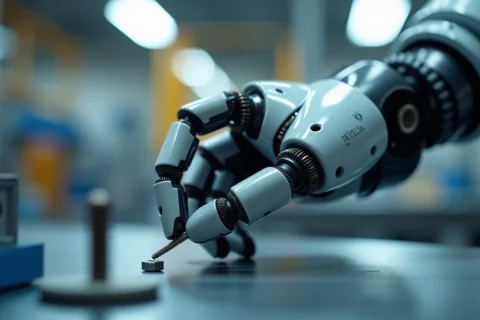
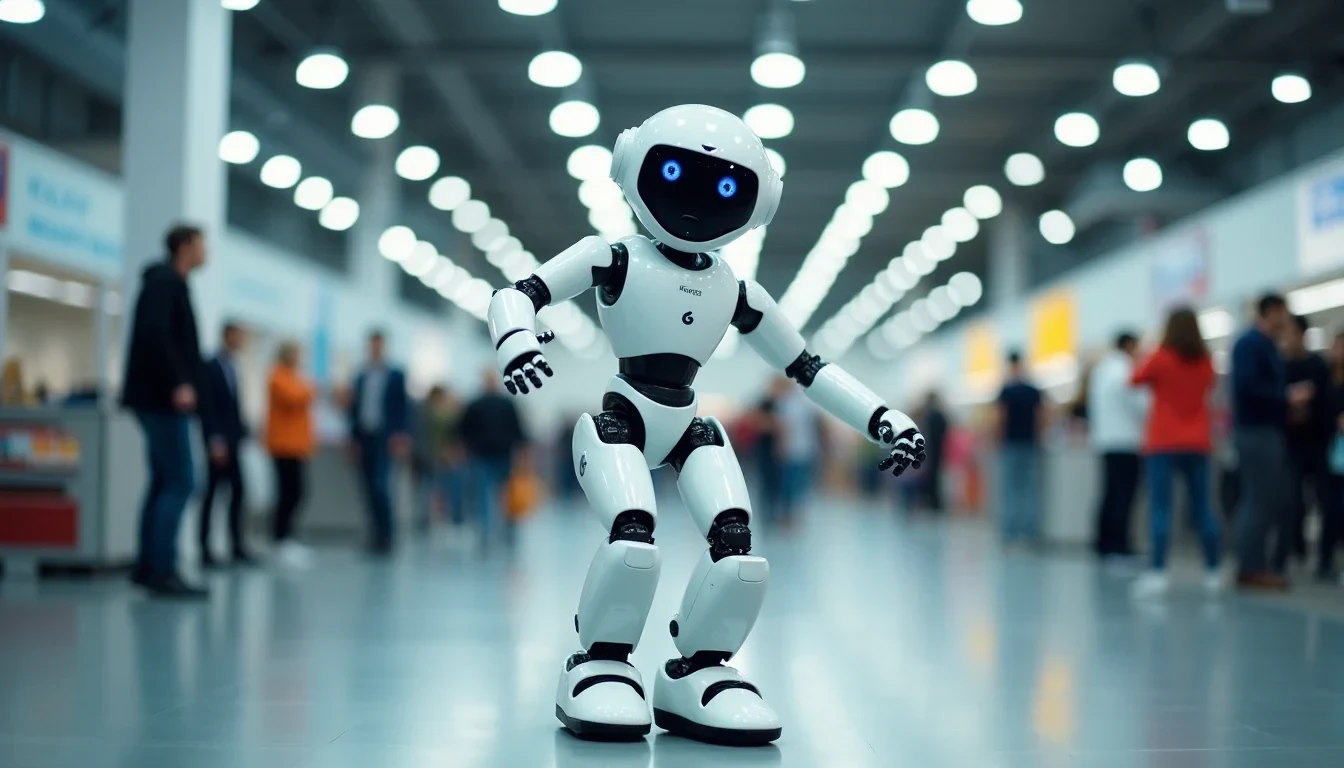
Unitree plans to raise 4.2 billion yuan on the Shanghai STAR Market, an offering that will force a reckoning viral videos have so far delayed. The Hangzhou-based company shipped roughly 5,500 humanoid robots in 2025, with humanoids generating more than half its revenue through September. Those numbers look like traction until you ask who bought them. Research labs, universities, and exhibition halls accounted for the bulk. Factory floors did not.
The IPO will measure whether humanoid robots can work, not whether they can dance or perform backflips.
The Two Markets Inside One Product Line
Unitree’s lower-cost G1 model broadened the customer base beyond the well-funded robotics departments that typically buy these machines. The G1 runs about 99,000 yuan, down from the six-figure price tags that kept earlier humanoids confined to elite research circles. Universities in second-tier cities now run them. Tech museums stage them. Corporate lobbies rent them for product launches.
Each of these buyers wants something different from a factory. A research institution prizes open APIs, raw sensor access, and the ability to modify gait algorithms. A public exhibition wants reliable choreography and crowd engagement. Neither cares about mean time between failures at 10,000 operating hours, or whether the unit can integrate with a Siemens PLC, or what the three-year total cost of ownership looks like against a line worker’s wages.
The factory buyer cares about exactly these things. Unitree’s prospectus will need to show that such buyers exist in quantity and return for more.
What Industrial Buyers Actually Count
The metrics in manufacturing are brutally specific. A humanoid robot must demonstrate labor cost reduction in tasks that are already budgeted, not theoretical. It must show throughput gains measured in units per hour against current baselines. It needs safety certifications like ISO 10218 and ISO/TS 15066 for collaborative operation, not demo-stage waivers. It must maintain uptime percentages that match or exceed existing automation, where a single unplanned stoppage can idle a multimillion-yuan production line.
Quality consistency is another hard filter. Human workers make errors, and so do robots, but industrial buyers need the error rate predictable and low enough to eliminate rework. Flexibility helps only if reconfiguration time is faster and cheaper than retooling a dedicated arm or redeploying an AMR. Otherwise the humanoid is just an expensive generalist losing to cheaper specialists.
Unitree has not publicly released factory-side performance data at this level of granularity. The IPO process may change that, or it may expose its absence.
The Valuation Question
At 4.2 billion yuan, Unitree enters pricing territory where investors will compare it to established industrial automation players, not just venture-backed hardware startups. Companies like Estun Automation or Inovance Technology trade on multiples tied to recurring industrial revenue, R&D conversion rates, and demonstrable market share in identifiable applications. Unitree’s current revenue mix, heavily weighted to one-off platform sales for research and display, does not map cleanly onto this framework.
Investors will look for forward contracts with manufacturing firms, not just letters of intent. They will want evidence of pilot programs that converted to scaled deployment, with repeat order patterns that suggest the robot became embedded in operations rather than remaining a trial unit. They will scrutinize whether Unitree’s software stack can handle unstructured industrial tasks, or whether each deployment requires extensive custom engineering that erases margins.
The manufacturing capacity question is also important. Producing 5,500 units for relatively undemanding research environments is one operational challenge. Building tens of thousands annually to factory-grade tolerances, with supply chain stability for actuators, sensors, and compute modules, is another entirely. China’s manufacturing ecosystem offers advantages here, but only if Unitree has structured its supplier relationships and quality systems for industrial-scale reliability, not batch production for niche buyers.
The Competitive Pressure Unitree Does Not Control
Other Chinese humanoid firms are pursuing similar transitions. UBTech has deployed Walker units in automotive factories, though operational details remain limited. Fourier Intelligence targets healthcare and logistics. AgiBot, founded by former Huawei engineers, is explicitly pitching industrial applications. The STAR Market listing gives Unitree capital to accelerate, but it also subjects the company to quarterly disclosure requirements that may reveal gaps before they are closed.
Foreign competition carries different weight. Tesla’s Optimus and Boston Dynamics’ Atlas attract Western attention, but neither currently sells into Chinese factories at scale. The more immediate threat comes from specialized automation that humanoids aim to displace. Fixed robotic arms from ABB, KUKA, and domestic rivals already handle welding, painting, and assembly at lower cost and higher speed. AMRs from Geek+ and Hikrobot move materials through warehouses without bipedal complexity. For humanoids to win share, they must do something these alternatives cannot, or do something comparable at converging cost.
What the IPO Will Actually Test
The listing is not merely a fundraising event. It is a forcing function for disclosure about a market transition that remains largely speculative. Unitree must articulate a credible path from 5,500 units sold primarily for demonstration and research, to a revenue base built on operational integration and measurable productivity gains in industrial settings.
The company has demonstrated that humanoid robots can be manufactured at volume and sold at declining price points. This is a genuine achievement. Whether it has demonstrated that these machines belong on factory floors, performing tasks that factory managers will pay to repeat, is the question the IPO valuation will answer in public view.
Investors who treat the 4.2 billion yuan target as a vote of confidence in robotics generally risk conflating technological spectacle with economic viability. The prospectus, when it lands, will separate the two. What Unitree has built is visible. What it has earned, in the harder currency of industrial utility, is what the market is about to price.