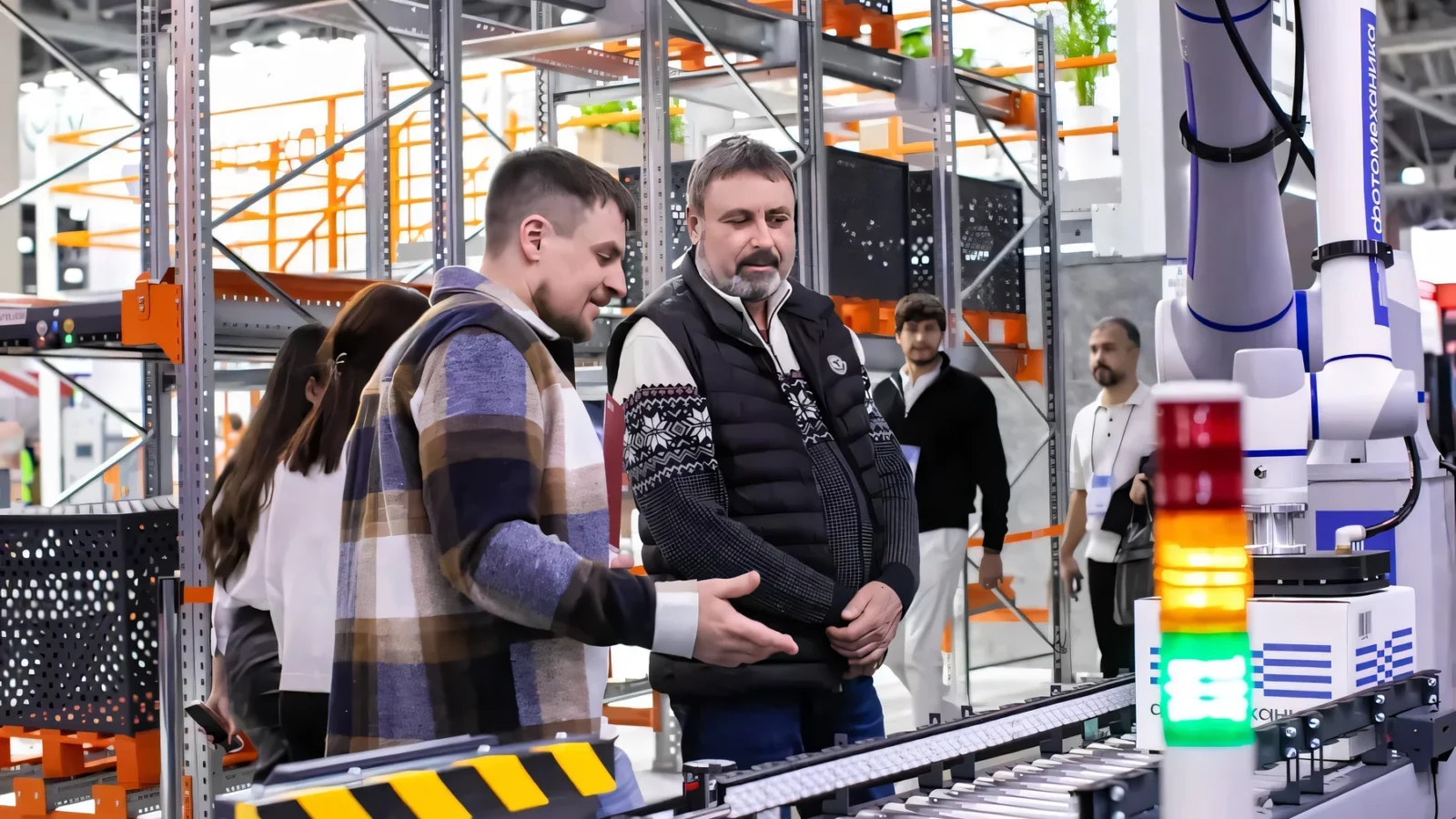
China’s 2026 to 2030 economic plan assigns AI Plus a manufacturing job. The program is meant to sit inside production lines, warehouses, clinics, and dispatch systems, where output, defects, and downtime are measured in yuan and lost hours, not likes or prompts.
By the end of 2025, official reporting said China already had more than 6,000 AI enterprises. That is a crowded field by any standard, and the policy response is not to chase another consumer chatbot race. Provinces such as Guangdong are building computing clusters and sector-specific deployment programs so AI can land where the money is actually made: inside factories, logistics networks, and industrial parks.
AI Plus is an industrial policy, not a chatbot campaign
Reading AI Plus as a public-facing software push misses the point. China is treating AI as a production tool, the same way earlier industrial policy treated robotics, advanced machine tools, and high-speed freight links. The target is not a prettier interface, but a more productive plant.
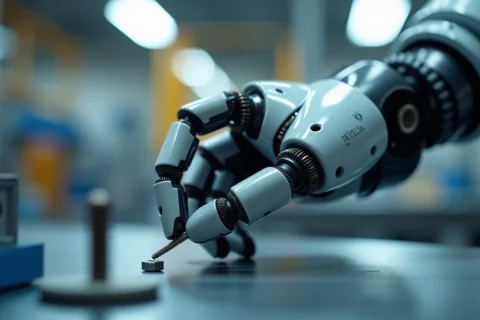
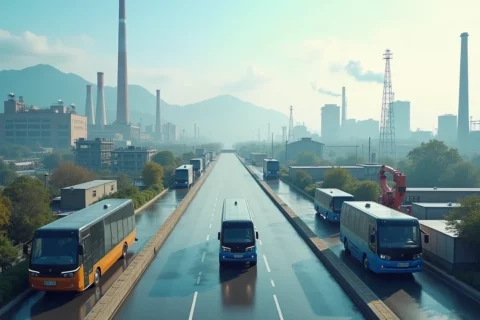
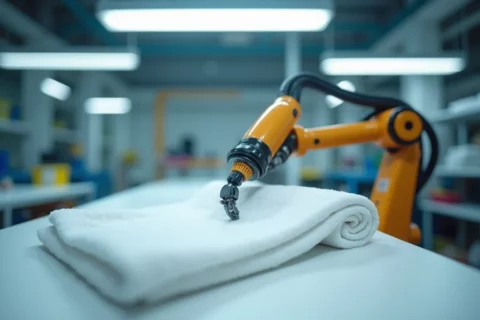
That shows up in the use cases being prioritized. Factory scheduling can be tuned to reduce bottlenecks and keep lines moving. Visual inspection systems can catch defects faster than a tired operator staring at a conveyor belt. Predictive maintenance can flag a failing bearing or motor before it shuts down a line. Product design tools can shorten the loop between concept, simulation, and test. Logistics software can route freight, balance inventories, and cut the drag of empty kilometers.
These are not glamorous applications. They are better than glamorous ones. A chatbot may impress a buyer in a demo. A scheduling model that keeps a parts plant from idling for six hours has a cleaner line to cash flow.
The real test is existing industrial clusters
China already has the factory density to make this strategy more than a slogan. Guangdong, Zhejiang, Jiangsu, and other manufacturing-heavy provinces need AI to lift throughput across electronics, machinery, automotive supply chains, and contract manufacturing networks that run on tight margins.
The provincial push matters because Guangdong is not waiting for a single national model to solve everything from the center. It is building computing capacity and deployment programs aimed at local industries. This is the right way to think about industrial AI: the data sits near the production system, the model learns from the production system, and the gains stay close to the production system.
A broader economic logic supports this approach. A model that writes competent text is useful, but a model that improves a stamping line, a warehouse, or a hospital intake desk affects labor use, machine uptime, and service speed. These are the levers that move national productivity. China does not need AI that can win a writing contest. It needs AI that can make a machine park, a port, and a distribution network run with fewer pauses.
What gets deployed first
The first wave is likely to be dull in the best possible way.
- Scheduling systems that match labor, materials, and machine time more tightly
- Computer vision for defect detection on assembly lines
- Maintenance models that predict failure before equipment stops
- Logistics tools that improve routing, loading, and warehouse flow
- Design software that compresses development cycles in engineering-heavy sectors
- Healthcare systems that help with imaging, triage, and patient flow
Each of these sits close to an operational pain point. Each can be measured, making them easier to justify than a broad consumer AI rollout, where the benefit is often talkative but fuzzy.
Why this version of AI is harder to dismiss
Consumer AI gets attention because people can use it immediately. Industrial AI earns its keep more quietly. If a factory drops defects, reduces rework, and keeps the line moving, no press release is needed. The result shows up in output and margin.
The policy choice is strategically serious because China is not treating AI as a standalone digital sector. It is treating AI as infrastructure for the sectors that already anchor the economy. Manufacturing, logistics, energy, and healthcare are being told to absorb intelligence into existing workflows. The ambition is to move from large-scale production to more precise production, from volume alone to volume with fewer errors and less waste.
The figure that matters is not how witty the model sounds. It is whether each industrial cluster becomes more productive after AI enters the room. If the answer is yes, the effects spread fast through suppliers, logistics firms, equipment makers, and downstream customers. If the answer is no, the policy becomes another expensive layer of software sitting above a machine base that never changed.
This is the central question China is asking now: Can AI help the country get more out of the factories, ports, clinics, and distribution networks it already has? If it can, the benefits will be visible long before foreign buyers start discussing Chinese AI as a consumer product story.