A single Nvidia H100 draws up to 700 watts and ships with lead times that once stretched past 35 weeks. The holdup was not the silicon itself, but the CoWoS advanced packaging that TSMC could not build fast enough. This gap between processor design and system-level delivery is where China’s semiconductor strategy has quietly reoriented, and where the next generation of Chinese chip companies is already taking shape.
The Processor is Only as Good as What Surrounds It
The raw compute of an AI accelerator means little if memory bandwidth chokes data movement, if substrates cannot route signals at required density, or if heat forces thermal throttling before peak performance is reached. These constraints have moved from engineering footnotes to production bottlenecks with real commercial consequences.
High-bandwidth memory stacks DRAM dies vertically and connects them directly to the processor through a silicon interposer. HBM3 and HBM3E supply from SK Hynix, Samsung, and Micron currently limits how many AI chips the industry can build. ABF substrates, manufactured through specialized processes with fine line-and-space capabilities, face similar supply constraints that have affected Intel and AMD alongside Nvidia. Optical interconnects are becoming unavoidable as electrical signaling hits physical limits between accelerators and across server racks, pushing co-packaged optics and silicon photonics from research concepts to procurement requirements.
Power delivery networks, thermal management, and the physical materials that enable all of these functions now determine whether advanced processors achieve their benchmarked performance in production environments. A data center filled with the most advanced GPUs still underperforms if the cooling is inadequate or the memory subsystem cannot feed the compute units fast enough.
Where Chinese Companies Are Positioning
China’s domestic semiconductor expansion has concentrated heavily in these supporting layers rather than pursuing leading-edge fabrication alone.
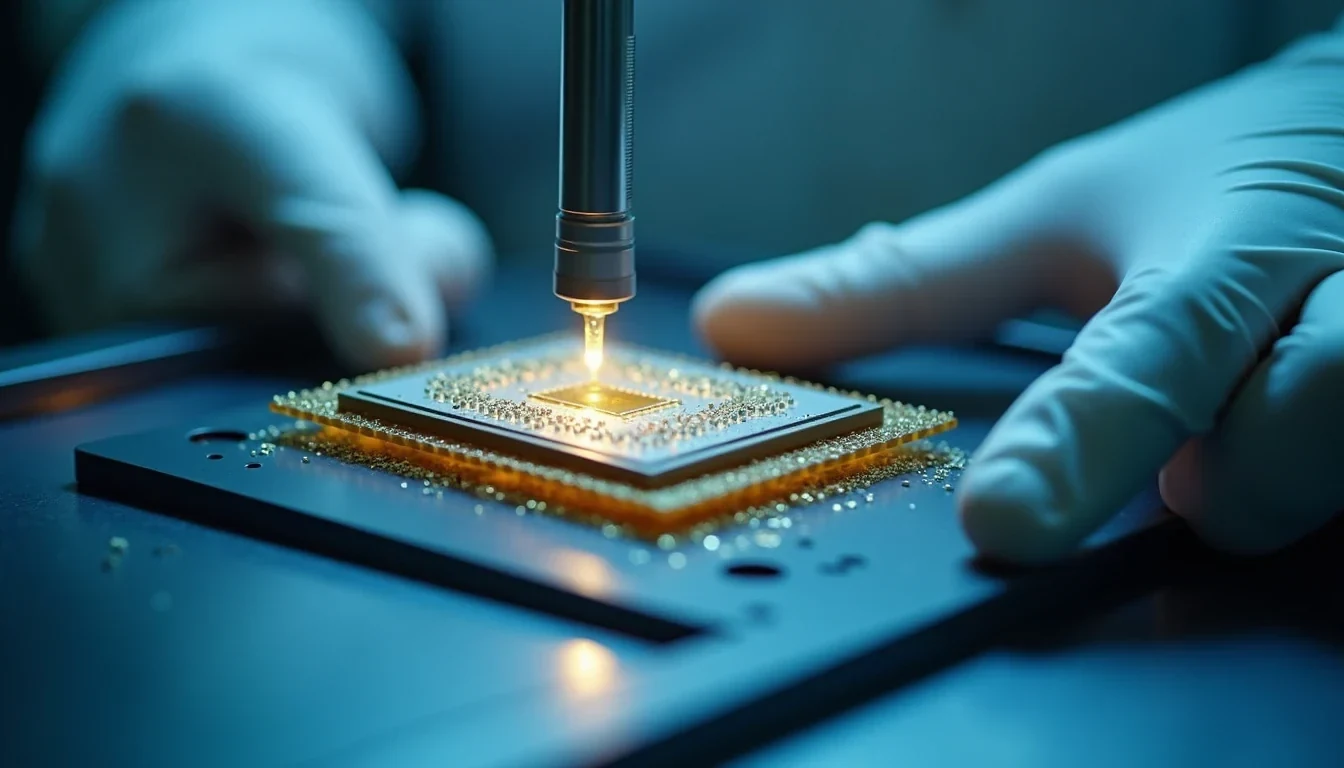
JCET Group, Huatian Technology, and Tongfu Microelectronics have built substantial advanced packaging capabilities including fan-out wafer-level packaging, 2.5D interposer-based integration, and 3D die stacking. These three outsourced assembly and test providers now serve both domestic Chinese chip designers and international clients, positioning them to absorb demand that TSMC’s CoWoS capacity cannot currently meet.
In memory, Changxin Memory Technologies continues advancing its DRAM process nodes and production volumes, while Yangtze Memory Technologies has developed its Xtacking 3D NAND architecture despite operating under export restrictions. Both firms anchor domestic supply for a market that cannot rely on unrestricted access to Korean or American memory products.
Shennan Circuits has invested in advanced packaging substrate production lines aimed specifically at localizing supply for Chinese chip designers, targeting the ABF substrate segment where Japanese and Taiwanese firms currently dominate. Accelink Technologies and Hisense Broadband Multimedia Technologies manufacture 400G optical transceivers with 800G modules in development, while HGTECH maintains active research programs in silicon photonics and co-packaged optics. These firms address the optical interconnect bottleneck as data rates between AI accelerators continue scaling.
Thermal management specialists including Auras Technology, Wuxi Guosheng Electronics, and Shenzhen Sunon Electric Appliance supply cooling components ranging from advanced fans and heat sinks to emerging liquid cooling systems for high-performance computing deployments. NAURA Technology Group, meanwhile, has expanded its semiconductor equipment portfolio across etching, deposition, and cleaning tools that advanced packaging and substrate manufacturing require.
Industrial Policy as Production Architecture
China’s manufacturing base provides more than cost advantages for these sectors. The concentration of precision machining capability, specialty chemical production, electronics assembly capacity, and logistics integration allows rapid prototyping and scaling that fragmented supply chains elsewhere struggle to match.
The National IC Industry Investment Fund has directed capital in phases toward this full stack of supporting industries, not merely toward headline fabrication projects. Local governments layer additional subsidies, tax incentives, and land grants for companies establishing operations in packaging, materials, and equipment. The coordination between national funding direction and local implementation creates capacity faster than market-rate investment cycles would permit.
Vertical integration pressure runs through the policy structure. Domestic suppliers are encouraged to source from each other, from high-purity silicon and specialty chemicals through finished components. The objective is not merely cost reduction but supply chain closure, reducing vulnerability to external restriction.
This operates against a backdrop of enormous domestic demand. China’s data center buildout, AI application deployment, and consumer electronics production provide ready offtake for locally produced memory, packaging services, and interconnect solutions. The market pull reduces commercial risk for capacity investments that might otherwise struggle for customers.
The Next Semiconductor Giant May Make Materials
The global semiconductor industry has historically rewarded processor designers and leading-edge foundries with the highest valuations and most visible brand recognition. Intel, Nvidia, TSMC, and Samsung occupy that tier. The supporting infrastructure that enables their products has remained comparatively anonymous and fragmented.
That fragmentation is ending as system-level performance constraints concentrate economic value in specific bottleneck components. A company that controls advanced packaging capacity, or specialized substrate supply, or optical interconnect technology at scale can capture margins and market position comparable to the processor designers themselves, particularly when that capacity is scarce.
China’s industrial policy has recognized this shift earlier and invested more systematically than Western counterparts. Many Western subsidy programs have concentrated on fabrication facilities while treating packaging, materials, and equipment as secondary concerns. The result is emerging Chinese firms with substantial technical capability and protected domestic demand that can fund further development.
The next globally significant Chinese semiconductor company may well manufacture thermal interface materials, advanced packaging substrates, or optical transceiver components rather than design processors. This would be a different kind of semiconductor champion than the industry has historically produced, but no less consequential for the structure of global AI supply chains. The processors attract attention, but the infrastructure around them determines what actually gets built.