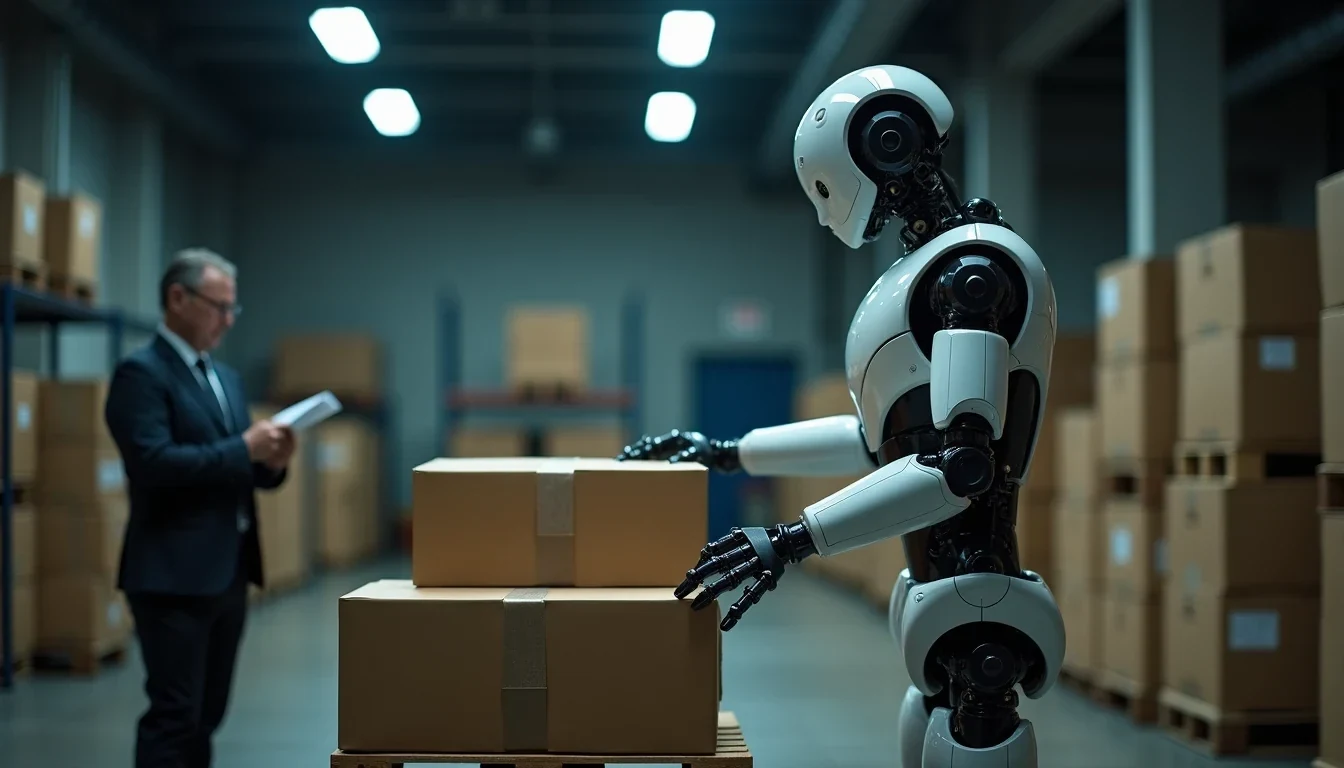
Last year, government orders for humanoid robots totaled 214 million yuan, a 4,500 percent increase over the 4.7 million yuan Beijing spent in 2023. This jump is not a statistical anomaly. China is deliberately treating its own bureaucracy as the first serious customer for machines that walk on two legs, grip with five fingers, and navigate spaces built for human bodies.
No other country buys humanoid robots at this scale. No private market exists yet to absorb them. Factories remain skeptical, waiting for proof that these machines can work longer, cheaper, or more reliably than their current arms, conveyors, and human labor. The Chinese state has stepped into that gap.
The Customer Before the Market
This distinction matters. Funding technology through grants and tax breaks keeps researchers employed and prototypes displayed. It does not force a manufacturer to deliver units that survive three shifts of welding spatter, misaligned pallets, or a careless forklift driver. A customer, by contrast, returns broken machines with complaints and stops placing orders if the failure rate climbs.
Beijing’s procurement strategy treats government bodies as that customer. Municipal offices, public service centers, and state logistics hubs are receiving humanoid robots under contracts that require sustained operation. Manufacturers gain revenue now, while private buyers observe and calculate. Reuters tracked central government spending alone. When municipal subsidies, investment funds, subsidized premises, and demonstration opportunities from local governments are added, the full support architecture becomes visible.
This is not merely de-risking; it is market construction by purchase order. A robotics company that might otherwise spend eighteen months chasing a single factory trial can instead bid on a government contract with defined specifications, predictable payment terms, and enough volume to justify hiring and training assembly workers. The state bridges the gap between laboratory curiosity and production line discipline.
What Government Deployment Actually Provides
These contracts create conditions difficult to replicate with venture capital or research grants alone. A humanoid robot placed in a municipal logistics facility for six months accumulates data on gait stability across cracked concrete, battery degradation in unheated warehouses, and the fifty-three ways a human hand can misload a package that training simulations never modeled. Centralized procurement allows manufacturers to aggregate this data across dozens of units operating under standardized reporting protocols.
Reliability engineering requires this kind of exposure. A robot that performs flawlessly for a ten-minute demonstration at a technology fair may seize its hip actuator on hour forty-seven of continuous operation because a seal compound degrades faster than predicted. Government contracts, with their longer durations and diverse deployment environments, surface these failures earlier and more systematically than episodic private pilots.
Production scaling follows naturally. Guaranteed order volumes justify investment in dedicated assembly lines, specialized machining centers, and supplier relationships for actuators, sensors, and rare-earth motor components. Economies of scale begin to operate, per-unit costs fall, and workforce skills accumulate. What starts as artisanal bench assembly becomes closer to industrial manufacturing.
The Demonstration Trap
The risk is equally structural. When the primary customer is a government procurement officer evaluating a pilot project, incentives tilt toward spectacle. A robot that can climb stairs while carrying a flag or bow to a visiting official scores higher in a demonstration review than one that reliably repeats the same palletizing motion ten thousand times without deviation. Feature creep becomes rational behavior.
Manufacturers may optimize for winning subsidized contracts rather than solving unsubsidized problems. A machine developed to impress municipal evaluation committees may carry sensors and articulation degrees of freedom that add cost without adding utility on a factory floor. The subsidy insulates the company from the price discipline that would otherwise force hard choices about which capabilities justify their expense.
The deeper danger is subsidy addiction. A firm whose revenue depends on government demonstration projects has little incentive to endure the difficult, unglamorous engineering required for genuine industrial adoption. The private market remains untapped because it was never truly pursued. Zombie companies persist, technically operational but commercially hollow, sustained by public procurement rather than productive value.
China has used this state-as-lead-customer model before, with varying results. Solar panel manufacturing scaled dramatically on government-backed demand, achieved global cost leadership, and now supplies most of the world’s installations. Electric vehicle subsidies created a domestic market large enough to drive battery cost curves down, although the subsequent consolidation revealed which companies had built real competence and which had merely assembled subsidy-eligible vehicles.
The humanoid robot experiment is earlier and more uncertain. The technology is harder, and use cases are less defined. The gap between a walking machine and a useful machine remains wide. This moment is distinguished by the velocity of state commitment and the specificity of its mechanism. Beijing is not just cheering from the sidelines or distributing research grants; it is placing orders, accepting delivery, and operating the machines. Whether that builds a market or a warehouse of expensive demonstrations depends on whether manufacturers feel pressure to graduate from government client to private customer. The 214 million yuan spent last year bought many robots. It remains to be seen what capability it bought.